In the past decade, India has seen a huge surge in online gaming, especially platforms like Dream11 (fantasy sports), real-money Rummy apps, poker sites, and other contest-style games. Hundreds of millions of young people and hobbyists play these games on their phones. What’s changed is that many of these games now offer real money prizes. Join a fantasy cricket contest for ₹100, win ₹5,000; play a rummy tournament for a small entry fee and cash out some winnings. Suddenly, what was a fun pastime can become a source of pocket money or more.
Just like lottery tickets or game shows, you can actually earn cash by winning. For example, during an IPL season, Dream11 may pay out crores of rupees in prizes each match, shared among thousands of winners. Rummy or poker apps run tournaments where skillful players can win cash prizes every week. Even casual skill games or quizzes sometimes give cash rewards.
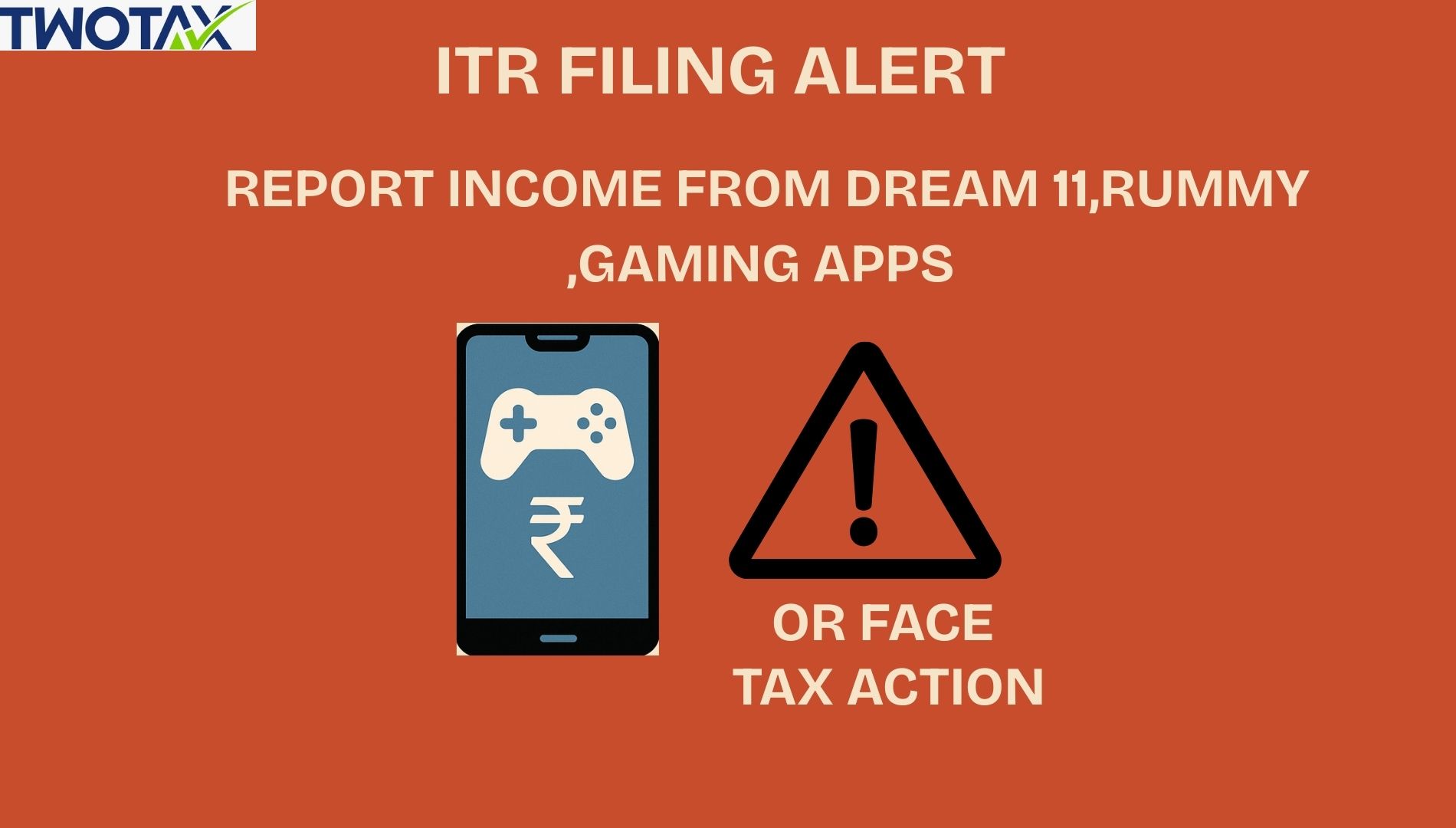
While this is exciting, there’s an important thing most players might not realize: the taxman is watching. The government considers these “earnings” as taxable income, just like any other prize or income. The rules are strict: a flat 30% tax is applied right from the first rupee you win, and you’re supposed to declare even small wins in your tax return.
Below, we explain what this means in simple terms , no confusing jargon , so that every gamer knows how to stay on the right side of the law and keep enjoying the games without worry.
How gaming income is taxed in India
Under Indian tax rules, the money you win from online gaming (like fantasy sports, Rummy, poker, etc.) is taxable at a flat rate of 30%. This is a special tax regime set up by the government. Unlike your regular salary or business income, where the first few lakhs are tax-free (basic exemption) and you pay tax in slabs, gaming winnings have no exemption at all. Even if you earn only a tiny amount from gaming, it’s taxed fully at 30%. There are no deductions, no rebates , the law treats these winnings like lottery or betting income.
To make sure this tax is collected, gaming companies automatically deduct 30% tax before you even get your money. For example, if you won ₹1,000, the app will often show something like: Your win ₹1,000, Tax deducted ₹300, You get ₹700. That ₹300 is called TDS (Tax Deducted at Source) and goes straight to the government under your PAN (Permanent Account Number). If you withdraw the money, the app adds up all your net winnings and calculates the tax. Even if you don’t withdraw, by law the company must deduct tax on any net winnings above a small monthly threshold (more on that later).
Because the gaming platform reports these TDS deductions to the tax department, there is a digital record of how much you won. The Income Tax department can see that “Aman won ₹20,000 on Dream11 last year and ₹6,000 was deducted as tax.” So, even if you think nobody’s checking, the data is there.
Mandatory ITR filing: yes, even if your income is low
In a normal year, if your total income is below the tax exemption limit (₹2.5 lakh for most people), you don’t have to file an income tax return. But gaming is special. Because tax is deducted at source on gaming wins, Rule 12BA of the tax laws says that if your total TDS for the year exceeds ₹25,000, you must file a return. And for most active gamers, hitting ₹25,000 of TDS is not hard if they won a few lakhs in gross winnings during the year.
What this means in practice is: If you won enough that the company deducted more than ₹25,000 in tax, you have to file a tax return, even if your regular income is below the exemption limit. However, experts also advise: even if you didn’t hit that threshold, it’s smart to file an ITR if you had any taxable winnings at all. Why? Because your TDS (the 30% already paid) will show up on your Form 26AS (the tax credit statement), and you should reconcile it by filing. If you skip filing, the tax department may wonder why you had so much TDS and no return to match it.
Bottom line: the fast rule of thumb is that anyone who wins cash on these gaming platforms should plan to file an ITR for that year. It’s not optional like it might be for a hobby , the tax rules are clear that you need to report it.
Why even a small win (yes, even ₹10) matters
You might be thinking, “I only won a few hundred rupees, or maybe just ₹10. Do I really have to declare that and pay 30%?” Technically, yes. The law says your gaming income is taxed from the first rupee. In fact, a tax expert (Chartered Accountant Mohit Gupta) explained it this way: Even if your net win is as small as ₹10, it is chargeable to tax at 30%, and should be disclosed in the ITR under “Income from Other Sources.” Practically speaking, if you win ₹10 and 30% (₹3) is deducted, you’ll receive ₹7. If that ₹3 is all the tax you owe and it’s already been paid, you might not end up paying any more money. However, the act of winning has been recorded and taxed, so officially it should be on your return.
The good news for very small wins is: if your only income is that ₹10 win (plus maybe standard salary below exemption), chances are you won’t actually have to pay extra tax out of pocket, because it’s already been taken care of. The taxman isn’t going to chase you for ₹3 or punish someone for missing tiny entries if everything else is clean. But the rule is still there to report it.
Think of it this way: transparency is the goal. The government says, “We’ll automatically take our share of any game winnings, and you should let us know that it happened.” It’s better to just file the ITR (you can even say you owe ₹0 more if the tax is all paid) and close the loop. That way there’s no mismatch between what the app reports and what you report.
There is one nice practical allowance in the law: if in a month your total net winnings do not exceed ₹100, the gaming platform can defer TDS until year-end. In other words, you get a ₹100 cushion per month. But once you cross ₹100 of net wins in a month, 30% is on the table. This rule doesn’t mean you don’t have to report small wins at all—it just delays the formal collection until the year is up or until you withdraw more. Still, at the end of the year your net annual win could be just a few rupees, but officially you should still report it.
Separating fact from fiction: common myths about gaming income and taxes
There are lots of rumors and misunderstandings floating around, so let’s clear some up:
-
Myth: “It’s just gambling; the government doesn’t care.”
-
Reality: The Income Tax Act explicitly covers gaming and winnings. It treats lottery, betting, or gaming income as “income from other sources”, taxable at 30%. Whether a game is classified as “skill” or “chance” by gambling laws doesn’t change the tax rule. Dream11 may argue it’s a skill-based game, but the tax department sees any real money game winnings as taxable.
-
Myth: “I lost money in games this year, so I don’t have to pay taxes.”
-
Reality: If your wins are less than your losses, you might feel like you made a net loss. Unfortunately, the tax system doesn’t allow you to set off gaming losses against other income or carry them forward. Unlike capital losses or business losses, gaming losses are ignored for tax purposes. You only declare net wins. If you truly had zero net win, you might owe no tax, but you still technically should file if any TDS was taken.
-
Myth: “The app already deducted tax, so I don’t need to do anything.”
-
Reality: It’s true the app deducts TDS. But filing an ITR is about reconciliation and compliance. Even if the tax is taken, you should file to make it official. Think of it like getting a payslip. Your employer deducts TDS on your salary, but you still file your ITR to show income and taxes paid. Same idea here: you won, tax was taken, now you show the details on your return. If you skip filing, the tax department’s records (Form 26AS) will show TDS from a gaming company, and they’ll wonder why you never filed a return. That could trigger a notice or demand.
-
Myth: “I only play small, nobody will notice.”
-
Reality: Even if you’re playing small, the total number of players is huge. Tax authorities are now more aware of this sector. They see aggregated TDS figures for each gaming company. If you got any TDS entries, that signals you should have a return. They may not knock on every small player’s door immediately, but ignoring it could still cause problems later, especially if you ever become a bigger earner or need official clearance (like loans or VISA, where proof of tax compliance may be checked).
-
Myth: “I can pretend it's a gift or loan, so I don’t have to report.”
-
Reality: That’s risky. If you withdraw money from a gaming platform and claim it as something else on paper, you’re essentially falsifying income sources. Tax rules for gifts are separate and require documentation for large sums. It’s not advisable to misclassify gaming income. Better to just face it directly.
-
Myth: “This only applies to big companies and winners.”
-
Reality: The rules apply to everyone. Whether you play Dream11 on the side or run a pro streaming channel, if there’s money changing hands and you win, it’s covered. Even independent card game apps or small fantasy platforms must deduct tax the same way. The ceiling is low: the first ₹1, so smaller players are included.
In short, don’t believe “the taxman won’t catch me” or “it’s too small to matter.” The law is clear and it was publicized in financial news. It’s best to be safe and deal with it up front.
What if I don’t report? Risks of non-compliance
Not declaring gaming income can lead to trouble, though the severity depends on how serious and willful the omission is. Here’s what could happen:
-
Mismatch notices: The most likely immediate issue is a tax notice. Since your gaming app reports TDS on your PAN, the income tax department’s system will show that you had some income and tax deducted. If you haven’t filed a corresponding ITR, you might get a notice under Section 142(1) asking why you didn’t file or why your tax credits (TDS) don’t match. Usually these notices are a gentle nudge to get you to comply. It’s hard to evade when there’s an official record.
-
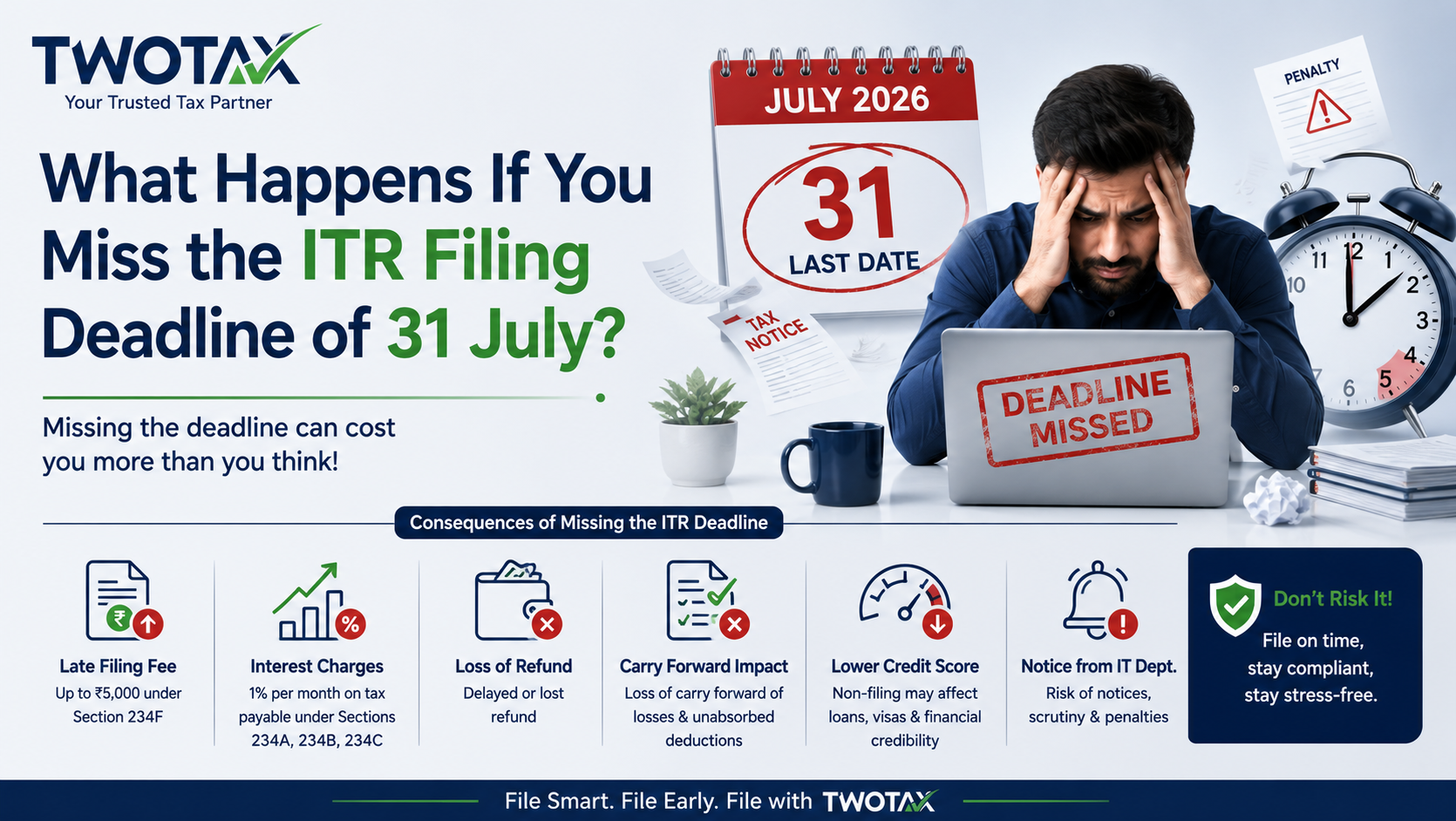
Interest and penalties: If you should have filed and haven’t, the department can calculate interest on any tax due. For example, if you ended up owing extra tax (say you had other income too), interest at 1% per month from the original due date applies. Also, a penalty up to 1% per month on the unpaid tax can be levied. That can add up if you delay filing. If the tax was fully paid via TDS and you missed filing, interest/penalties might not be huge for very small amounts, but it’s still something to fix quickly once you realize.
-
Prosecution for willful default (very rare): There is a provision (Section 276CC of the Income-tax Act) for imprisonment if someone willfully fails to file their return. In practice, this is an extreme step and a last resort. It’s used only if someone is clearly breaking the law to evade tax on large amounts, and other remedies have failed. Most people who miss a small filing requirement will simply get a notice and penalty, not jail time. But it’s worth knowing that the law does mention prosecution. The key word is “willful.” If you ignored things deliberately after getting notices, that’s riskier. But if you correct your return voluntarily, you should avoid any criminal issues.
-
Tax audits or scrutiny: If you become a high earner on these platforms and have big claims, the tax department could ask for audits of your returns. They will check if you properly reported all winnings. If they find discrepancies (like missing income), they could levy more tax, interest, and penalties under the “best judgment” or “income escaping assessment” rules.
-
Other consequences:Beyond the tax office, failing to report income can affect things like loan applications or government clearances where tax compliance is checked. For example, if you want a home loan, banks often look at your tax returns. If you claim lower income because you hid your gaming wins, that could backfire.
Bottom line: If you legitimately earn money from gaming, the safe move is to report it. The world is digital now, and the tax department uses data analytics. Avoiding the issue only makes potential consequences bigger later. It’s much better to have peace of mind by complying now.
How to file and report your gaming income
Filing your taxes might sound scary, but for gaming income it’s fairly straightforward:
-
Collect your records: Keep track of your annual gaming summary. Most apps provide a “transaction summary” or “income statement” at year-end. It will list total deposits, total withdrawals, and total winnings. Save these or take screenshots. Also check your Form 26AS online (from your net banking or tax portal) to see the TDS amounts credited.
-
Use the right section in ITR: When filling out the ITR form (online on the income tax e-filing portal), you’ll find a section for “Income from Other Sources.” Gaming income goes here. Some newer ITR forms may have a specific schedule or checkbox for “Online gaming” or “Winnings from lotteries” , but if not, just write it under Other Sources with a note. Enter the gross winnings and then enter the TDS already deducted. The form will compute net tax.
-
Pay any tax due: In most gaming cases, the TDS covers it. But if you had a lot of winnings and other incomes, you might owe a bit more tax. Or if you had prizes in kind, calculate the cash equivalent tax. Pay any remaining tax and interest (if applicable) before the due date, then file.
-
File on time: Normally, the deadline to file an ITR is July 31 after the financial year. For example, for games played in April 2024-March 2025, file by July 31, 2025 (unless extended). It’s best to file early rather than wait.
-
No income besides gaming?: If gaming is your only income and below exemption, you might technically not be required to file (if no TDS) , but experts recommend doing it anyway for clarity. And if you did have tax deducted, you should absolutely file even if your total income is small.
-
Get help if needed: If you’re confused, consider consulting a chartered accountant or using an online tax-filing service. They can guide you on exactly where to report the numbers. It’s generally not very complicated , for most gamers it’s an “ITR-1” or “ITR-2” form with some extra lines.
By being proactive and filing your return, you will have a clear record and avoid any surprises. It’s better to spend an hour filling a form than to ignore it and face a notice later.
Staying honest pays off
It’s natural to feel a bit uneasy , you might think, “I’m not a real ‘professional’ worker, how will this affect me?” But honesty and early compliance protect you. Here’s why it’s worth staying above board:
-
Peace of mind: Once you file correctly, there are no doubts about your legal standing. You won’t lose sleep wondering if the tax office will come knocking.
-
Benefits of being a taxpayer: Filing your tax returns builds a record of compliance that can help in life’s milestones. Need a home loan or a credit card? Banks often look at your IT returns. A clean tax record makes those smoother.
-
Refunds and credits: If too much tax was deducted, filing lets you claim it back. Maybe you’ll get a partial refund, which is always nice.
-
Helping the community: By following the rules, you set an example for friends and online communities. Often gamers discuss rumors (like “secretly you don’t have to file”), and by sharing the truth you raise awareness.
-
Avoiding harassment: If you wait until a notice comes, you might find yourself scrambling. Better to do it voluntarily. If your gaming income is regular and recurring, make it part of your annual routine to check tax implications.
Remember: the goal of the tax rule is not to punish gamers. It’s to ensure everyone contributes fairly when they make money, even from games. By being upfront, you show you’re a responsible citizen. Plus, as one tax expert put it, if you’ve already paid the tax (via TDS), you have nothing to lose , you’re just formally matching what’s already happened.
Final tips and spreading the word
Here are some practical pointers to wrap things up:
-
Keep clear records: Note down all your contest wins and losses. Many apps offer yearly statements , download them. This makes filing easy and accurate.
-
Check your PAN/TDS statement: Log in to your income tax e-filing account before filing. Under “View Form 26AS,” make sure the TDS entries from gaming sites match what you expect. This helps catch any mistakes early.
-
Plan ahead: If you’re a big gamer expecting big winnings, set aside about 30% of potential wins (in your head) for tax so you’re not surprised. Or better, know that the app already did that for you.
-
Ask questions: If you’re unsure, talk to a tax-savvy friend, an accountant, or even post on financial forums. There’s lots of advice out there now about gaming income tax. Just verify from reliable sources.
-
Be honest on your return: There’s no benefit to hiding gaming income. It’s far riskier to dodge than to just include it. Even if you think “No one will check my small amounts,” it’s a gamble not worth taking.
-
Educate your peers: Share what you learn with other gamers. Often people assume “tax” is only for big companies or big earners. They might not realize our mobile app winnings are also incomes. A quick chat or sharing an article can help many avoid trouble.
-
Stay updated: Tax laws can change. For example, from April 2023 new rules tightened how much TDS is deducted (they even removed earlier exemptions). Keep an eye on official announcements or credible news sources so you know if anything new affects you.
-
Plan for next year: Once you’ve filed one return with your gaming income, it becomes a pattern that the tax department expects each year. Build it into your routine when you file ITR for your salary or business, just add the gaming section. Over time, it won’t be a chore, just a part of annual “adulting.”
Finally, remember that laws are only as good as the awareness of people. By understanding and following the rules, you protect yourself from penalties, and you contribute to a fair system. And by spreading the word among gamers, you help everyone play responsibly , both in the game and with their taxes.
Stay savvy, play smart, and when it comes to taxes on those winnings, stay on the right side of the rule book. After all, winning is fun, but being trouble-free is better!