GST 2.0 One Month Later: Economic, Consumer & Business Impact in India
India's GST 2.0 one month in: consumption up, but many consumers see no price cuts, Learn how tax cuts affect businesses & buyers.
By CA (Dr.) Arpit Yadav November 01, 2025
One Month After GST 2.0: Economic, Business, Consumer and Government Impacts
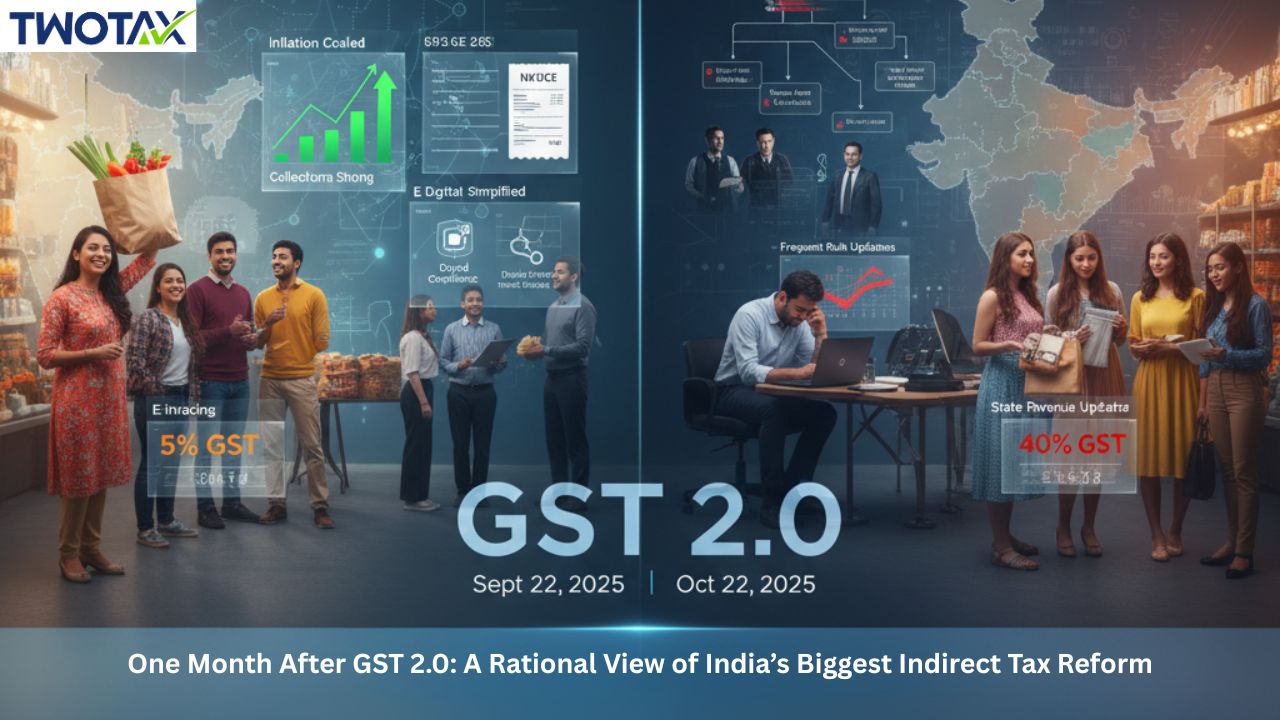
GST 2.0,India’s sweeping indirect-tax reform effective Sept 22, 2025 ,has begun to reshape the economy. Early signs are encouraging. Finance Ministry reports and analysts note that switching to just two main tax slabs (5% and 18%, plus a 40% rate for luxuries) is easing price pressures and boosting demand, Inflation has already cooled to multi-year lows, helped by lower GST on staples. In fact, retail inflation hit an eight-year low as food prices fell and GST cuts took effect,,. The Finance Ministry and Union Bank of India project October CPI inflation well below 3%, perhaps under 0.5%, on a favorable base and tax relief. IMF and RBI have responded by raising India’s FY26 growth forecasts (to ~6.6–6.8%) in part due to these reforms
Inflation easing:Economists credit GST 2.0 for taming prices. “Recent policy measures, including GST rate rationalisation, are expected to keep inflation moderate” while supporting demand Union Bank of India notes October prices will benefit from the “full impact of recent GST reforms”. By late October, annual consumer inflation in cities was around 2%, and only ~1% in rural areas (well below RBI’s target), largely thanks to lower taxes on daily essentials.
-
Strong revenue:Despite lower rates, GST collections have remained robust. September 2025 receipts were ₹1.89 lakh crore ,up 9.1% from a year ago ,the ninth straight month of rising GST revenue. Officials told ET they are “broadly aligned with budgeted revenues” and expect only a modest shortfall, if any. The timing of reforms during the festive season “underpinned domestic consumption and revenue buoyancy,” allowing the government to cover shortfalls with non‐tax receipts.
-
Demand boost:Lower taxes on consumer goods have quickly translated into sales. Industry surveys show September factory sales jumped in key sectors. For example, Credit Association of India (CARD) reported auto sales up 5–6% as buyers flocked to cheaper cars and bikes. Refrigerators and TVs saw huge spikes ,air-conditioner sales doubled on day one of the new regime, and TV sales jumped ~30%,,,as consumers took advantage of tax cuts and festival discounts. A senior official noted: “Demand has surged as intended, and revenue is still holding strong despite lower tax incidence”. Consumer confidence and spending have thus firmed up, at least through the post-GST festive season.
Business Impact
-
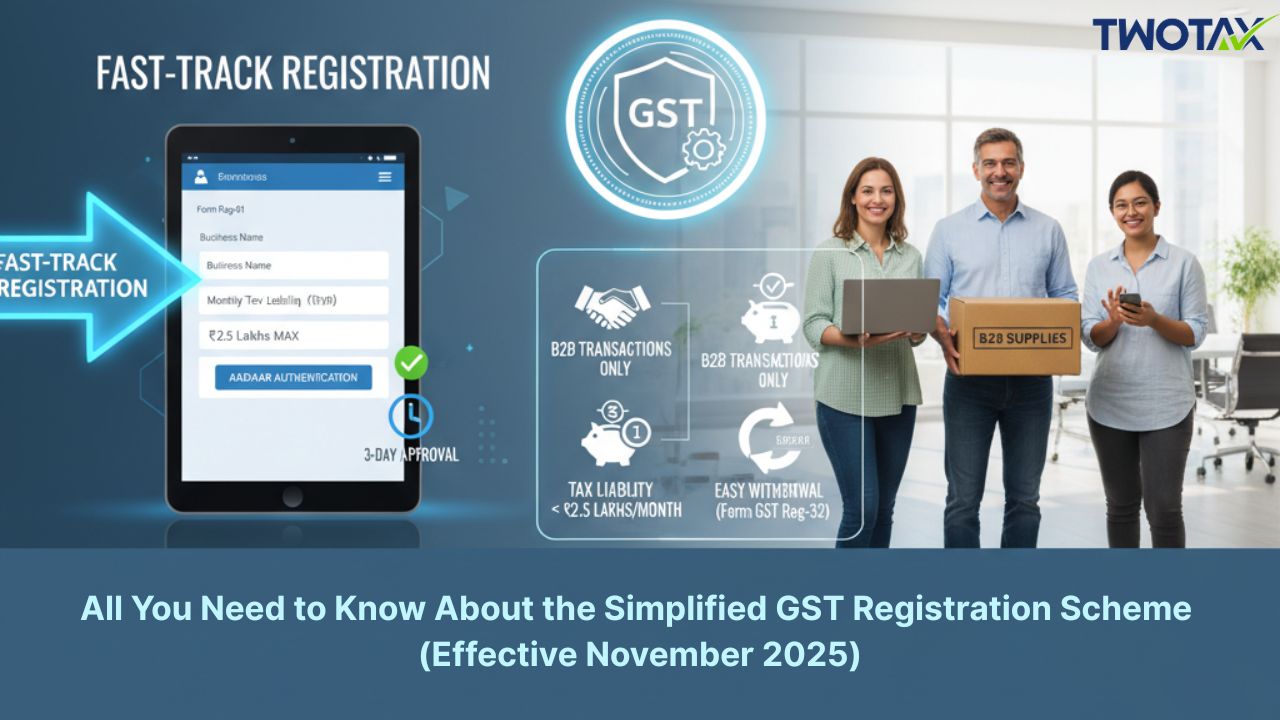
SMEs and startups:Small firms benefit from easier compliance. From Nov 1, the GST Network will automatically approve 97% of low-risk registration applications within three working days. The system uses PAN/Aadhaar verification and data analytics to vet applicants, freeing officials to focus on fraud cases. Businesses say this will drastically cut red tape.
Automated registration for SMEs under GST 2.0 (Business Today),Under the new system, most new small taxpayers get registration approved in three days via data-driven PAN/Aadhaar checks
Simplified compliance:Major procedural upgrades tighten the audit trail. E‑invoicing becomes mandatory for B2B sellers above ₹2 crore turnover (down from ₹5 crore), broadening the digital invoice network. The new Invoice Management System (IMS) forces buyers to accept or reject each supplier invoice before claiming ITC, eliminating blind credit claims. Returns forms are also modernized: GSTR-3B is auto-populated from purchase data, and even quarterly filers see auto-drafted summaries. These changes make mismatches easier to spot, reduce fake invoices and improve input-credit tracking.
-
Industry effects:Businesses of all sizes are reacting. Automakers have been among the biggest winners ,tax on “small” cars fell from 28% to 18%, and even large vehicles got a cut to 40% (from 50%). Reuters reports dealers saw a 5.2% rise in auto sales in Sept, with festive promotions adding a 34% surge during Navratri. Industry players expect even stronger October sales around Diwali. Consumer-electronics and appliances similarly jumped: one report shows AC shipments doubled and TV sales soared by 30–35% on day one of the new tax rates,,. Retail chains, appliance makers and even tech gadget sellers have kicked off special offers, passing some tax savings to buyers.
Cars on a production line,India’s auto sector rebounded under GST 2.0. Dealers say their Sep car and two-wheeler sales grew ~5% YoY as tax cuts took effect. Lower taxes plus festive discounts drew new buyers into showrooms.
-
Sector winners and losers:Most everyday goods got cheaper taxes: soaps, toothpaste, foods, and even petrol accessories are mainly in the 5% slab. Some consumer durables could be ~10–15% cheaper now. By contrast, luxury and branded items carry higher or new taxes. High-end clothing (priced over ₹2,500) and jewelry now often attract 18% or even 40%, which prompted warnings. The Clothing Manufacturers’ Assoc. called the higher garment tax a “death knell” for wedding apparel. Early trade data show modest dips in high-end demand, though mass-market textiles and ready-to-wear (“sub-₹2,500”) are explicitly cheaper by up to 13 percentage points. Overall, industry experts say companies must adjust pricing: Raymond’s CFO has already pledged, “we will pass on (the tax benefits) to consumers”.
-
Logistics and supply chains:Simplified rates reduce paperwork and border hurdles. (For example, cements and auto parts now have aligned GST rates, lowering costs for builders and parts suppliers) With uniform 5% or 18% rates, transporters spend less time reconciling taxes at state borders. Meanwhile, e-way bills and GSTN “analytics” are tightening control over freight. The government points out that simpler slabs yield “fewer disputes, quicker decisions, and simpler compliance”,a boon for large corporates and traders that used to juggle multiple GST rates.
Consumer Impact
-
Lower prices for essentials:By design, almost all daily-use goods now have lower GST. FMCG items like soaps, shampoos, cooking oil, and food are largely at 5% instead of 12–18%. The government expects this will translate into noticeably lower store prices. Indeed, officials are actively monitoring retail prices to ensure businesses pass on the cuts. One news report notes that 99% of goods fall into just the 5% or 18% bracket now, promising a “nationwide GST Bachat Utsav” (savings festival) for shoppers. Some major retailers have even publicized pre- and post-GST price lists (as directed by the government) to highlight discounts
-
Inflation relief:Consumers are already feeling relief. September’s CPI inflation was subdued, and October is expected to be even lower. Union Bank of India projects October consumer inflation well below 3%, driven by softer food costs and the full impact of GST cuts. RBI observers also see consumer-price inflation drifting down towards 2.5–3.0% for FY26, thanks in part to the tax reforms. In effect, GST 2.0 has become a deflationary force on household budgets.
-
Availability and sentiment:Festival shopping has been brisk. Alongside cheaper tax rates, the government’s transparency push (like mandating display of old vs. new prices) seems to assure buyers they’re getting true discounts. Early surveys (by industry bodies) show rising consumer sentiment. Rural spending, which had been weak, has perked up: a government bulletin notes “robust growth in consumer demand during the festive season even in rural areas,” especially for autos and FMCG. All told, most consumers see GST 2.0 as a windfall on everyday items, though middle‐income families will watch clothes and jewelry prices more carefully until the wedding-season shopping settles.
-
Digital invoicing:For the tech-savvy shopper, a quieter benefit is a more traceable economy. With GST 2.0 mandating e-invoices from more businesses (turnover above ₹2 cr), nearly all invoices now enter a national database. This means buyers always get a verifiable digital invoice, curbing under-reporting. In effect, consumers dealing with larger suppliers find transactions more transparent. (It also deters fraud: one report found 25,009 fake firms involved in bogus credit claims of ₹61,545 crore in FY24-25,,,a problem GST 2.0’s tech safeguards aim to catch.)
Government Impact
-
Easier tax administration:For the state, GST 2.0 is about digital and simplicity. The new two-slab system alone reduces complexity across ~95% of goods and services. Officials note that simplifying the rate structure and overhauling forms makes compliance more predictable, turning GST into a “citizen-centric, business-friendly” tax. Already, the Centre’s analytics teams have observed that most taxpayers’ returns now involve straightforward 5% or 18% entries, accelerating processing.
-
Technology upgrades:The government has aggressively leaned on tech. The GST Appellate Tribunal (GSTAT) was launched on Sept 24 with a full e-filing portal. FM Nirmala Sitharaman highlighted that GSTAT will operate “digital-by-default,” with virtual hearings and time-bound orders, cutting legal backlog. Similarly, the GST Network (GSTN) portal has added advanced checks: auto-populated GSTR-3B, QRMP integration for small filers, and tighter e-waybill blocks for non-filers. In practice, these ensure faster refunds and reduce frivolous litigation. (As Sitharaman put it: digital returns, e-invoices and online refunds “have reduced the burden on taxpayers and strengthened trust”.)
-
Fraud reduction:GST authorities see these reforms as a crackdown on evasion. With data-driven registration, the post-Nov 1 process will flag suspicious new applicants for offline checks, focusing resources on suspected fake firms. The mandatory invoice acceptance (IMS) forces businesses to verify each transaction, a change expected to plug the notorious “fake invoice” loopholes. Rule changes (like lowering the threshold for e-invoicing and implementing track‐and‐trace on selected goods) are explicitly aimed at tracking grey transactions. Tax experts confirm that, with these tools and even slight increases in penalties for non-compliance, the system is more audit-ready. One senior official noted that higher collection numbers despite rate cuts show the system is catching real activity ,and that once the year-end settles, any shortfall will be modest and offset by better enforcement.
-
Overall governance:Official statements sum up the reform mindset. The Finance Ministry calls GST 2.0 a continuation of India’s “minimum government, maximum governance” push the launch press note proclaims GST 2.0 is delivering “unity in policy, unity in compliance,” and is proving to be a “fair and trustworthy tax system” In practice, taxpayers are seeing that their appeals now go to one national tribunal, returns are more user-friendly, and receipts are more reliable. Early feedback from industry bodies has been largely positive: most agree that in its first month, GST 2.0 is indeed making the tax regime leaner and more digital.
In short, one month into GST 2.0, India’s economy has received a shot of stimulus. Consumers report lower prices on essentials, businesses (especially in auto and durables) are moving more volume, tax collections have held up, and the government has rolled out new digital safeguards. Remaining challenges, like ensuring everyone shares the tax windfall fairly and smoothing out system glitches, are being actively addressed. But the early outcomes suggest that GST 2.0’s promise of simpler taxes, honest compliance, and stronger growth may well be on track.