Connect with us for all your queries


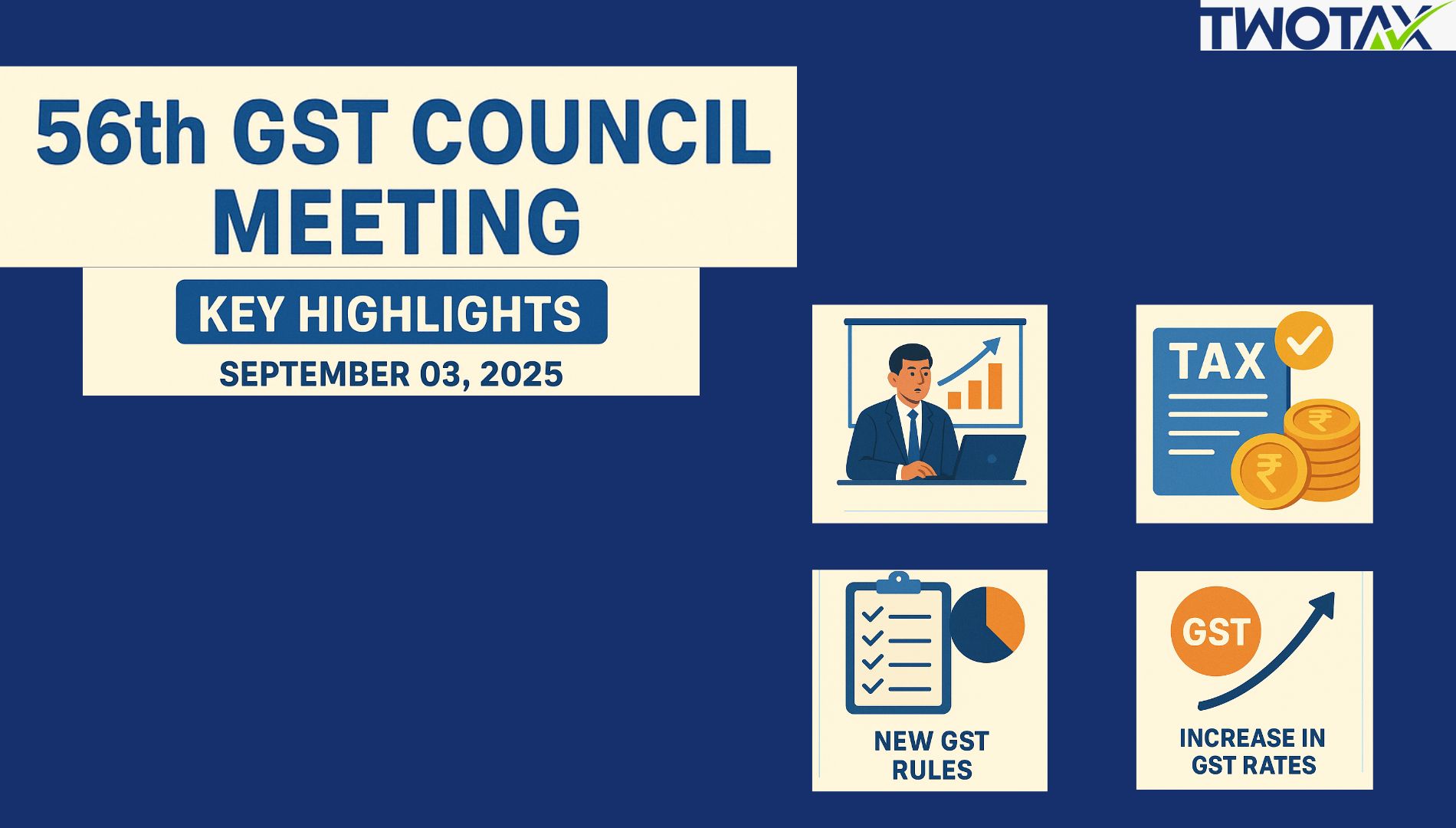
The 56th GST Council Meeting on 3rd September 2025 in New Delhi wasn’t just about numbers and slabs. Under Finance Minister Nirmala Sitharaman, the Council made decisions that ripple through our daily lives, from the food on our plates to the way businesses handle compliance.
Many common items saw big rate reductions (or full exemption). For example, household staples and personal-care goods that used to carry 12–18% GST now attract just 0–5%. Life-saving medicines and medical devices were also cut (some cancer and critical drugs became GST-free). Even school supplies were largely made tax-free. The table below shows representative categories, old vs new rates, and the impact:

Effective from 22nd September 2025 (except tobacco & pan masala, which will continue under current cess until obligations are settled).
While most items got cheaper, a few “sin” and luxury goods now face higher taxes to discourage harmful spending and repay past GST loans. Pan masala and tobacco products (sin items) will attract a 40% GST rate (instead of ~28%+cess). Sugary and caffeinated drinks (sodas, energy drinks) are now 40% GST (up from 28%). Likewise, luxury vehicles and high-end bikes move to a 40% slab (up from 28%+cess). The table below highlights these:


The Council also approved measures to simplify GST for businesses and exporters. Key points include:
These changes aim to cut red tape and ease cash flow for businesses, helping them comply without legal headaches.
A big institutional change is the creation of a GST Appellate Tribunal. GSTAT will start accepting appeals by end-September 2025 and begin hearings by December 2025. States and taxpayers were given until June 30, 2026, to file any older pending appeals. The Principal Bench will also serve as the national body for GST advance rulings.
These steps mean businesses will soon have a dedicated GST court to resolve disputes. Officials say this will provide a robust, consistent mechanism for settling tax matters and give greater certainty to taxpayers. In other words, disputes should be settled faster, with uniform rulings – boosting trust in the system.

This framework ensures consistency in rulings, faster dispute resolution, and reduced litigation burden.
Tax Partner is India’s most reliable online business service platform, dedicated to helping you in starting, growing, & flourishing your business with our wide array of expert services at a very affordable cost.